No. 3 — The Ticket That Never Left
Some corners of a city never got the memo about time passing.
One afternoon in early spring, I wandered through Jeonju Hanok Village with no plan at all — historically how my best decisions happen, and several of my worst. The rooflines curved against a pale sky. Tourists drifted past with coffee cups, deep in debate about lunch. A wind bell clinked somewhere, doing its one job.
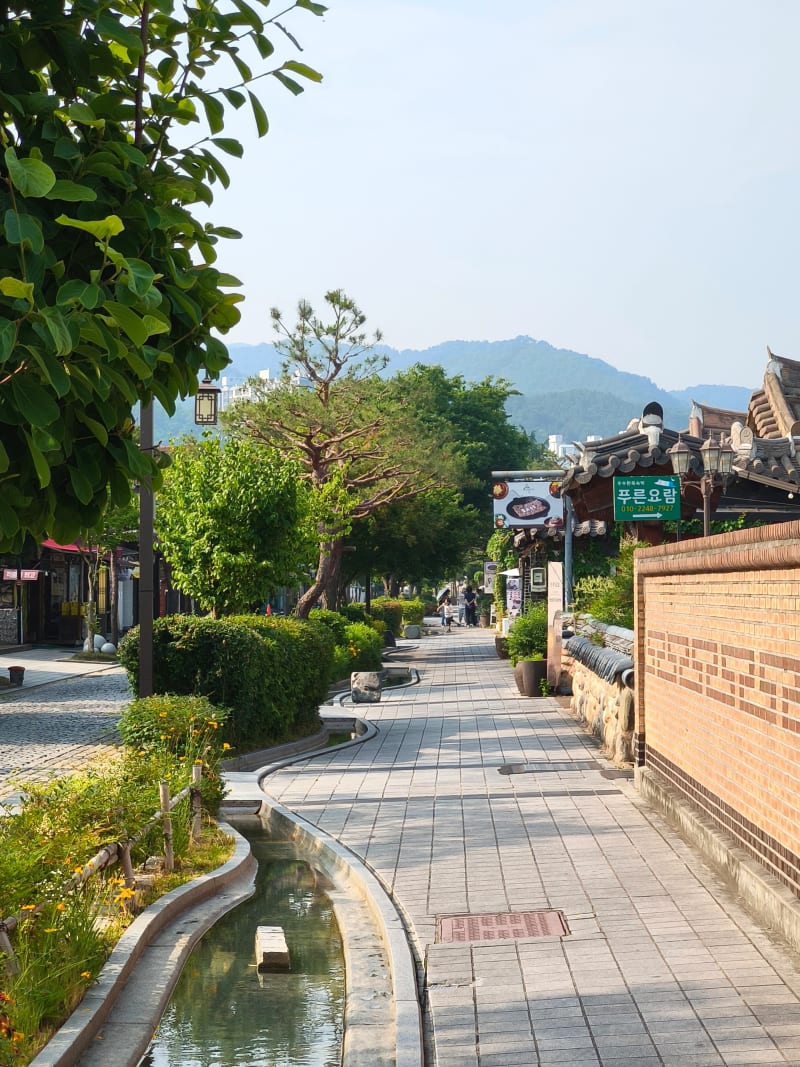
I’ve lived near this village most of my life, which means I’ve watched it slowly remodel itself while I did the same, somewhat less elegantly. Shops changed hands. Roofs got patched. I did not get patched — I just picked up a few extra creaks and an increasingly opinionated set of knees.
Lately I notice time more than I used to. Not with despair, more the way you notice a friend’s hair has gone gray and remember, with a small jolt, that yours probably has too. You just can’t see the back of your own head.
A sign reading Dongmun Used Book Library pulled me off the main lane, mostly to escape the ongoing lunch negotiations outside, so I went in.
The place smelled less like the dusty bookstores of my twenties and more like dried leaves, an old wooden drawer, paper that had been quietly minding its business for decades. Tidy shelves, soft afternoon light, someone clearly fonder of this place than the job description requires.
With no intention whatsoever, my hand landed on a copy of Forgiveness by the Dalai Lama. I’d like to claim I chose it as a deliberate act of self-improvement, but honestly it was just the nearest spine. The cover had gone soft at the corners. The pages had tanned the particular yellow that only comes from sitting in sunlight, unread, for a very long time.
I opened it. Something slipped out and landed in my palm.
A bus ticket. Faded edges, sharp print. 2004.09.26.
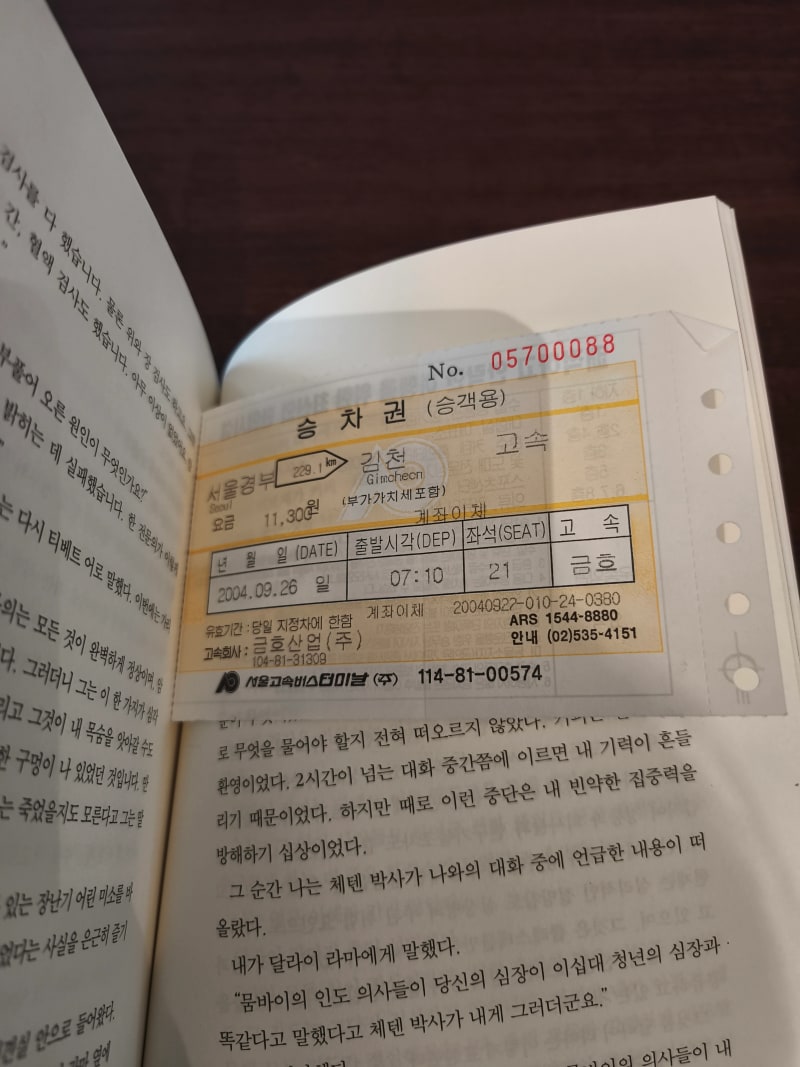
More than twenty years old, and somehow more legible than my own handwriting. Outside this room, two decades had rearranged entire neighborhoods — buildings demolished, infants grown into adults with mortgages and opinions, governments come and gone. This little rectangle hadn’t budged an inch. As far as it was concerned, the bus was still five minutes out.
I pictured the previous owner — reading a few pages at the terminal, tucking the ticket in as a bookmark when the bus was finally called, then simply leaving. Onto the bus, into whatever came next, never once circling back for either book or ticket. The book eventually wandered its way to a shelf in Jeonju and sat there, presumably bored, for two decades, until I came along and disturbed the peace.
The joke, really, was the book it had picked to hide in. A ticket marking the exact spot where someone walked away clean, tucked inside a book called Forgiveness — found by someone who has kept several decade-old grudges in considerably better condition than this ticket.
Mine are the verbal kind. A comment from 2011 I can still recite with the original intonation. A friendship that ended right around the time smartphones got good, certain lines from that argument still on standby, ready to perform on command. I wasn’t sitting at any bus terminal. I was just keeping a drawer of old tickets, mint condition, going nowhere, on principle.
I left the ticket where I found it. Twenty years of minding its own business seemed worth respecting, so I slipped it back between the pages and returned the book to its shelf, for whichever future stranger fancies a heavier read than they bargained for.
Outside, the village hadn’t moved an inch — same roofs, same tourists, same unresolved lunch argument. I walked off slightly lighter, having apparently set down some unspecified amount of luggage I hadn’t realized I was still carrying.
Mostly, though, I was just relieved I hadn’t been the one who left that ticket behind in the first place. Twenty years is a long time to keep a bus waiting.