No. 4 — The Unnamed, Simply Being
The alarm goes off at 7:47, which is either disciplined or deeply embarrassing depending on who’s asking. Outside, the Hanok Village is already warming under a clear June morning — early light catching the curved roof tiles, a cat crossing an empty lane with the confidence of someone who has never once been late for anything. A shopkeeper somewhere slides open a wooden door. Nobody here seems in any particular hurry, including, apparently, the morning itself.
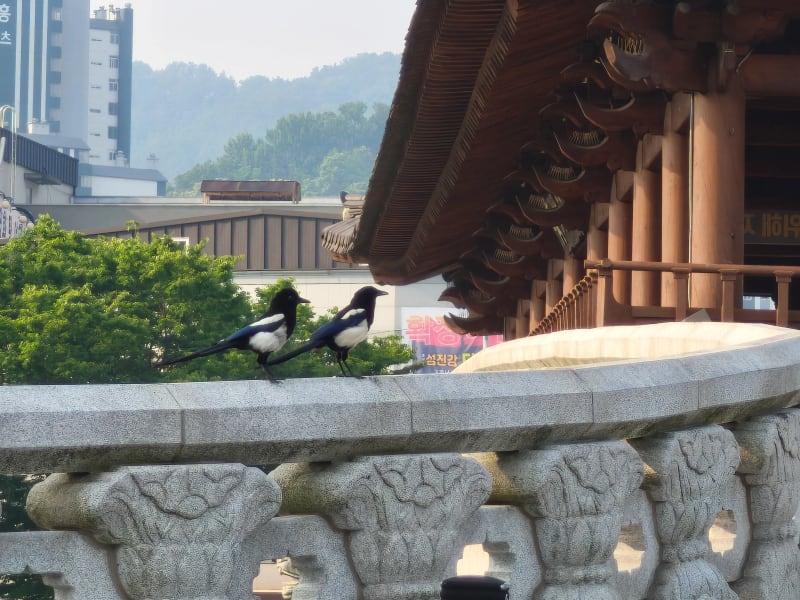
I was walking the familiar path toward the bridge when I stopped, mostly because two magpies had set up what looked like a meeting at the entrance, and I didn’t want to interrupt.
They sat there doing the brisk, suspicious head-turns birds are so good at, clocking everyone who passed like a pair of unimpressed security guards. They noticed me. They did not seem to care.
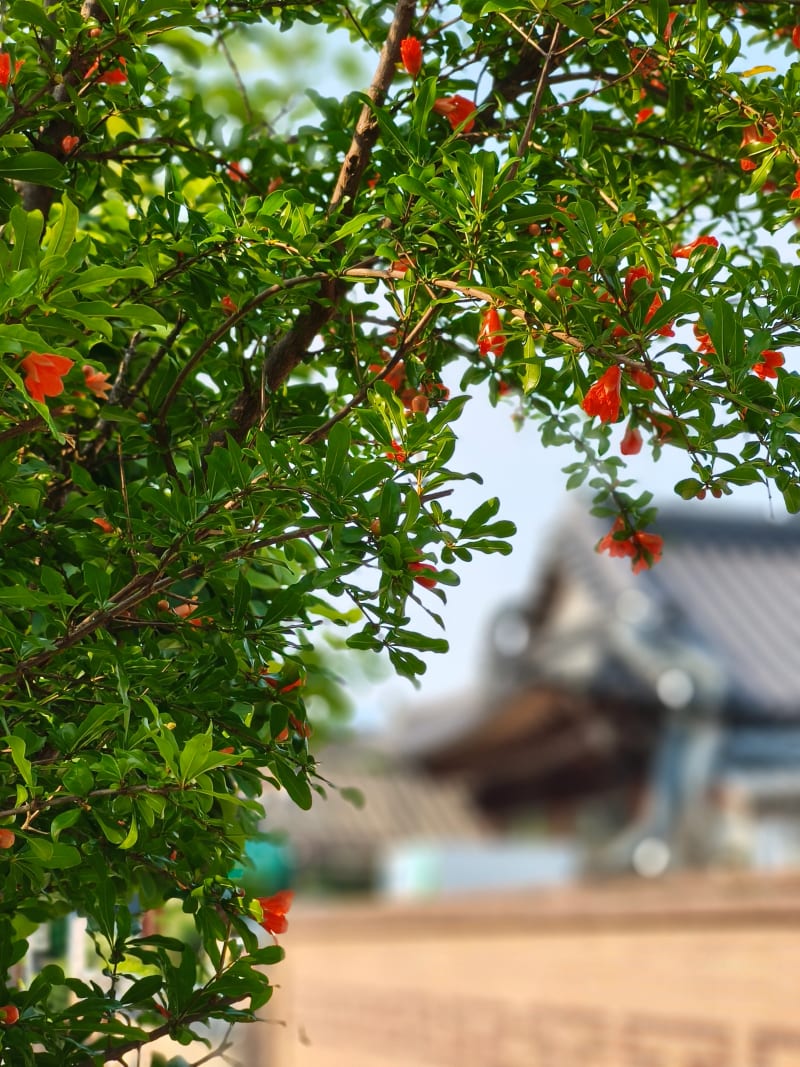
By the time I’d cleared security, the roses were waiting, fully aware of their own importance. They’d arrived about two weeks ago, and the whole neighborhood has been talking about it since — on the bus, on every other phone screen, in the tone usually reserved for celebrity sightings. The roses have bloomed. Deep, theatrical red, lining the path like they’d been booked for the role months in advance. Every poem ever written about roses seems to have been composed specifically to flatter these.

A little further along, where the stone pavement stops being photogenic, something else was blooming with none of the publicity. A small purple flower — or possibly the particular blue that only happens once sunlight gets involved — was growing straight out of a crack in the ground, stem about as thick as dental floss, face turned up to the morning as if it hadn’t gotten the memo that nobody was watching. A woman in running shoes stepped directly over it without so much as a glance down.
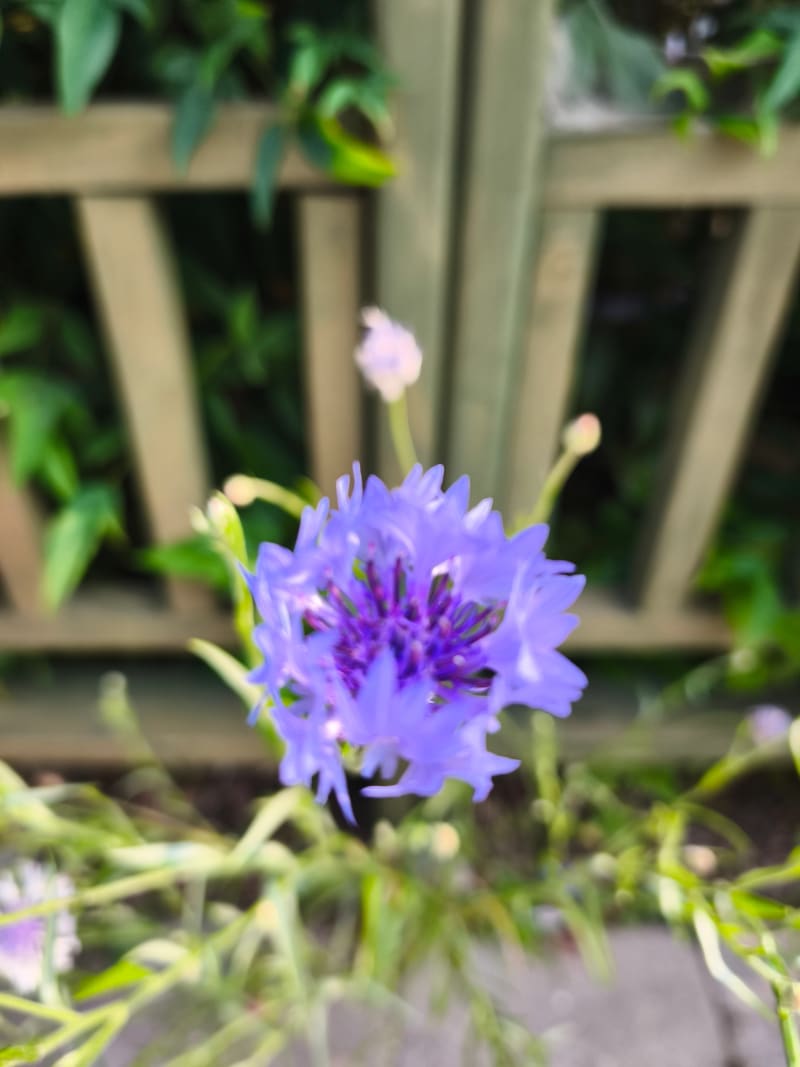
By any honest measure, it was doing precisely what the roses were doing — catching the same light, running on the same morning, putting in identical effort for an audience of absolutely no one. The crack in the pavement and the formal flower bed were, professionally speaking, working the same shift.
Nobody’s gotten around to naming this one, which mostly just means nobody’s had the chance to be impressed by it on purpose. The rose got there first — got a name, a season, several centuries of flattering verse, an entire marketing department. The flower in the crack got a crack. Functionally, they’re tied.
I thought about this longer than the flower probably deserved, partly because I, too, walk around with a business card full of official-sounding words, and I’m not entirely convinced those words are doing more work than this flower’s complete lack of any.
The magpies, for their part, had no opinions on any of this. They were at the bridge because that’s where the bridge happened to be. No further explanation requested or offered.
The lanes filled in slowly the way they always do here — a shop owner setting out a small display, two older men trading slow conversation on a bench by the stream, the sun finally clearing the rooflines enough to make everything look intentional.
I reached my own street, key already out of my pocket. Behind me, the magpies had presumably relocated to go harass someone else’s morning.
The shop door opened, and the light came in with me — the specific kind June does well, landing across the floor and lighting up a small galaxy of dust that had clearly been there the whole time, just waiting for someone to open the door and notice.