No. 5 — Dreaming of 'Arirang' Along the Curve of the Roof Tiles
June 8th
In June, the afternoon light in Jeonju shows up late and overstays its welcome. It lies flat across the entrance of Namcheon Bridge like it’s avoiding rent.
I was doing what everyone does on a slow afternoon — scrolling with no destination — when a headline knocked me sideways: BTS World Tour ‘Arirang’ in Busan. I pictured the stadium for about four seconds — lights, thousands of phones held up, the works. Then, for reasons I can’t fully defend, my brain filed the whole thing under “wrong location” and rerouted itself to Namcheon Bridge instead.
Specifically to Cheongyeonnu, the little pavilion at the bridge’s center, its roof curling up at the corners like it’s permanently mid-shrug. Jeonjucheon ran along underneath, doing what rivers do, which is mostly just continuing.
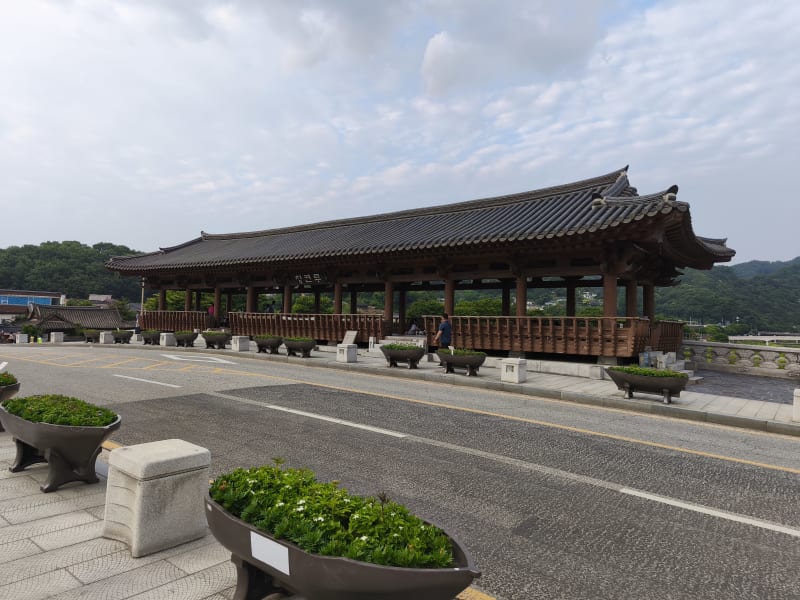
Across the bridge, the city was doing its evening-commute routine — idling engines, blinking crosswalks, the universal urgency of people who needed to be somewhere five minutes ago. Inside the village, none of that urgency had been invited in. Wooden floors creaked at their own pace. A shop sold rice wine into the early evening air. A cat slept on a warm wall like it held a long-term lease on the spot.
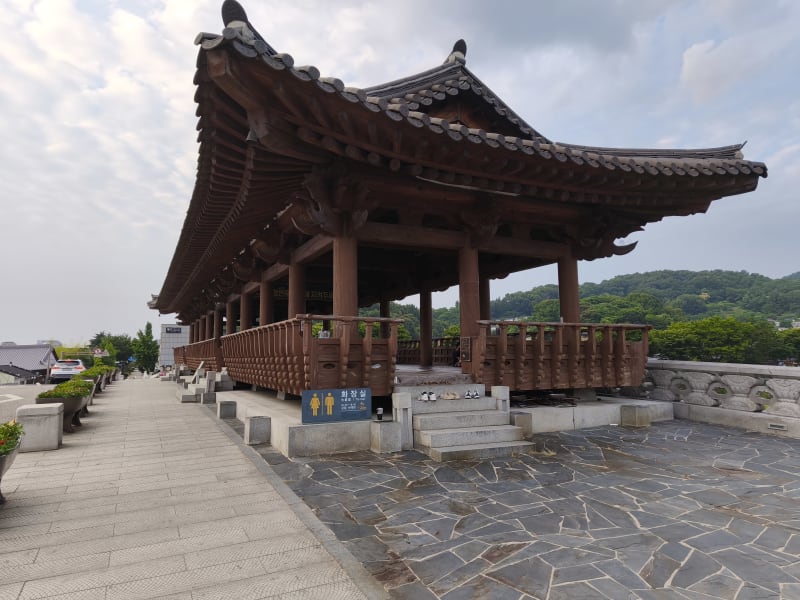
My daydream, lacking a stadium-sized budget, downgraded considerably. No pyrotechnics, no synchronized lights, no fifty thousand phone screens held aloft. Just somebody — no name attached, no headline required — sitting on the wooden floor of Cheongyeonnu with one guitar and whatever voice they had left by the end of a June afternoon, singing Arirang to absolutely nobody in particular.
Arirang doesn’t really need an audience, or even a singer with much technique. It’s been sung by people who couldn’t locate the source of their own sadness and just let it leave through their mouth instead. Nobody can say with certainty who wrote it first, which somehow makes it everyone’s — like a recipe passed down with no original author and several hundred regional variations, all insisting theirs is the correct one.
What I kept circling back to was the sheer distance between a billboard and a bridge. A stadium concert reaches someone in the back row who will never see a face clearly — which is genuinely its own kind of impressive. But the version in my head had no reach at all. The guitar was quiet enough that you’d have had to sit close just to hear it properly. The song wasn’t going anywhere. It would just loiter — around the roof tiles, into the gaps between the stone pavers, through the door of the rice wine shop right as someone happened to step outside.
There’s something almost rude about how small that is, next to a stadium. I liked it anyway.
The oldest versions of Arirang were probably exactly this small — somebody not trying to sound good, just trying to put a feeling down somewhere outside their own chest. Na-reul beorigo gasineun nim-eun — the one who leaves me behind — handed from one mouth to the next without losing much in transit.
As dusk came in, the lanterns along the path lit up one by one, small orange fires behind paper. The June blue didn’t disappear so much as get demoted to a deeper shade — the one Korean calls borasaek, a purple that’s somehow both bright and heavy at once, which feels a little like cheating, color-wise.
I never made it to Busan. I didn’t hear the actual concert. But I sat with my no-budget version of it long enough that it started to feel like something that had really happened — a song crossing a small bridge in the late afternoon, slipping into the water, and continuing downriver well past the point where I could keep track of it.
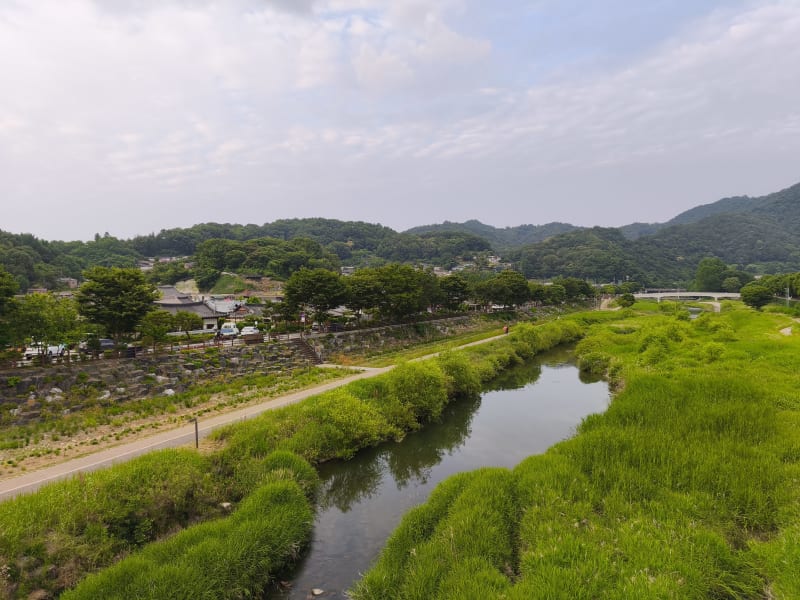
The Jeonjucheon did not pause for any of it. It just kept moving, the way it always has, taking whatever the city handed it and letting it go without much ceremony.